





2026 Ram 1500 HEMI® Engine Specs & Performance Overview
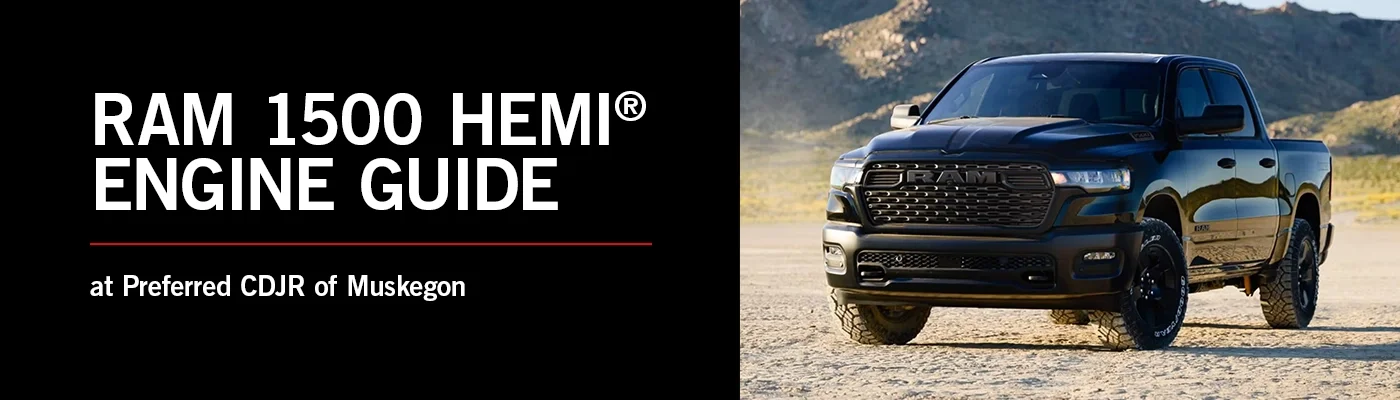
It’s not often that an engine becomes as legendary as the vehicles it was used in, but if you only know the name of one automotive engine, it’s the HEMI. The HEMI wasn’t just famous for being a great engine; it literally changed the whole automotive industry. So it’s no surprise that the HEMI has some fans, fans that insisted Ram bring the HEMI back as an option for the 1500. With the return of the HEMI, it’s important to note why this is such an important move.
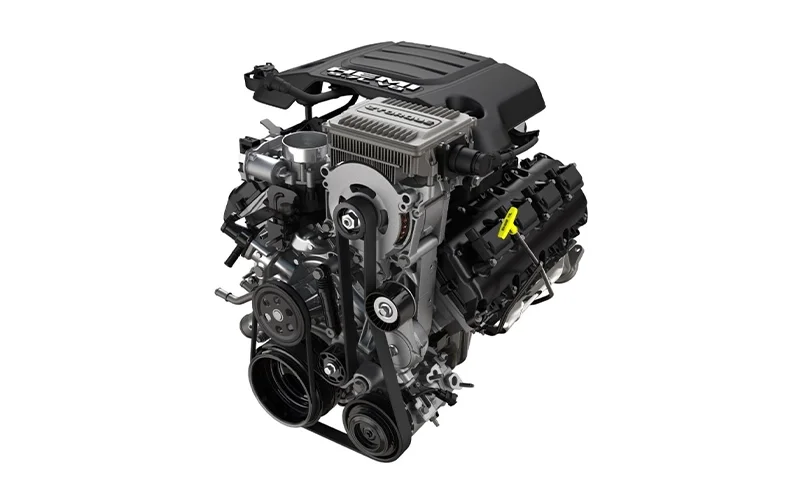
The Story of The HEMI Engine
The HEMI engine is named for its hemispherical combustion chambers, a design that was absolutely revolutionary when it was first introduced. This design allows for domed piston heads that increase compression ratios without the need for a longer stroke, as well as allowing for larger valves and better airflow. In short, it makes the engine quite a bit more powerful without any changes to the total displacement. This was first tested in a V16 engine developed for a prototype of the P-47 Thunderbolt, a WWII-era fighter plane. The engine was developed to replace the radial engine originally used in the plane, and while it would have been an upgrade for the plane, testing didn’t wrap up until the war was already winding down, and it never made it into production. It was very much a similar story for the V12 version developed as a replacement for the engine in the M47 Patton tank.
The first civilian version of an engine with hemispherical combustion chambers came at the end of 1950, for the 1951 model year. This was the Chrysler/Imperial FirePower V8 engine, which had a 5.4-liter displacement. This was followed by the DeSoto FireDome and the Dodge Red Ram, each with a unique design and components, despite the commonality of the combustion chambers. But it was in 1964 that the HEMI branding appeared, in the form of the absolutely legendary 426 HEMI racing engine. Since NASCAR still had homologation requirements in those days, the 426 also found its way into road cars, starting with the Dodge Dart and Plymouth Fury, followed by the Dodge Coronet the following year. Many more models would follow, as the muscle car era ramped up. And it was in 1970 and 1971 when the word Hemi was even used in the model name itself, with the Plymouth Hemi ‘Cuda.
The second generation of the HEMI would end after the 1971 model year, but a third generation would finally see the light in 2003. While larger 6.1-liter and 6.2-liter versions were produced for limited application, it’s the 5.7 HEMI that is the backbone of the HEMI resurgence. Of course, today, basically all automotive engines use hemispherical combustion chambers, as there’s no denying that they offer a significant advantage. But modern Chrysler, Dodge, Jeep, and Ram vehicles that use HEMI engines are carrying the DNA and engineering expertise that first gave the world this technology, and that’s reflected in how loved these engines are.
Ram 1500 HEMI
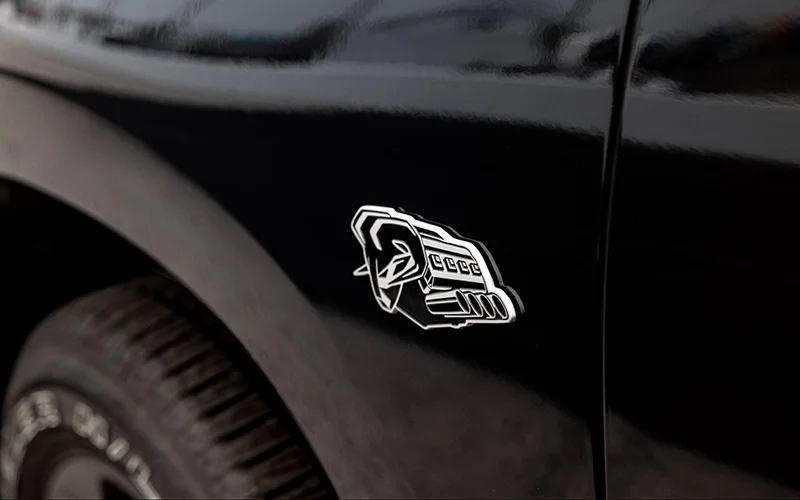
Following a brief period where there was no HEMI engine offered in any vehicle, the HEMI is back, and the first vehicle to get it as an option is the Ram 1500. This is the highest-output version of the 5.7 HEMI, producing 395 horsepower and 410 lb-ft of torque. This makes for a maximum towing capacity of 11,320 pounds. Ram does point out that both forms of the 3.0-liter turbocharged Hurricane I6 engine are more powerful, and that one has a slightly higher towing capacity, but the HEMI is a fan favorite, and with the reintroduction of the engine, Ram also introduced special badging for 1500s equipped with the HEMI.
Find Your 1500 at Preferred Chrysler Dodge Jeep Ram of Muskegon
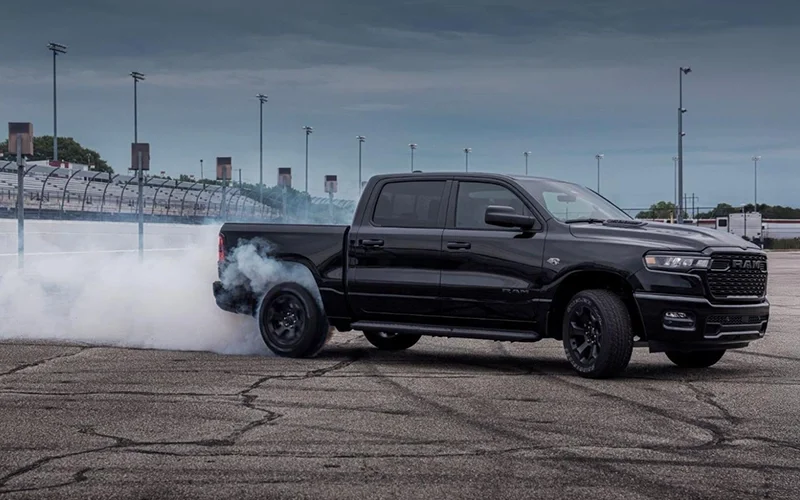
Here at Preferred Chrysler Dodge Jeep Ram of Muskegon, we know Ram trucks, and if you’re in the market for a new HEMI-powered 1500, we have exactly what you need. Experience the reborn HEMI and its smooth power delivery, great towing capacity, and unbeatable sound for yourself.